The Art and Utility of the Vector Surfboard Logo Icon in Modern Design
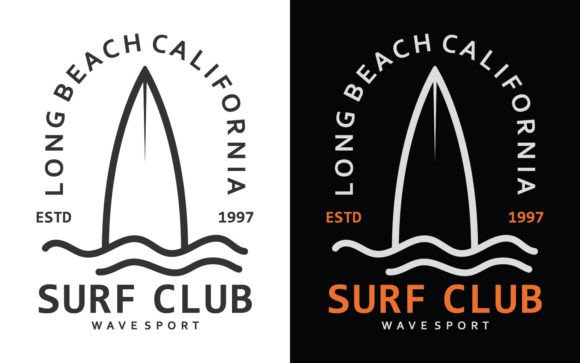
In the vibrant intersection of sport, lifestyle, and graphic arts, few symbols carry as much immediate cultural weight as the surfboard. Whether depicted as a sleek longboard gliding over a glassy swell or a short, agile board cutting through a barrel, the silhouette of a surfboard is instantly recognizable. For designers, marketers, and brand creators, leveraging this imagery requires more than just copying a photograph; it demands the precision and versatility of a Vector Surfboard Logo Icon. This digital asset serves as a cornerstone for branding in the surfing industry, encapsulating the essence of summer, freedom, and adventure in a scalable, clean format.
The transition from physical surfing equipment to digital design elements reflects a broader trend in how we consume visual information. A vector image, defined by mathematical paths rather than pixels, allows for infinite scalability without loss of quality. This technical advantage is crucial when creating a collection of assets that must look equally sharp on a tiny mobile app icon and a massive billboard overlooking the ocean. By isolating the shape of the board, designers can strip away unnecessary noise, focusing on the pure graphic impact of the object.
Understanding the Versatility of Vector Graphics in Surf Culture
Surf culture is deeply rooted in aesthetics. From the vintage vibes of 1960s Hawaii to the high-performance extreme sports imagery of today, the visual language of surfing is diverse. A Vector Surfboard Logo Icon acts as a chameleon within this landscape. It can be adapted to fit various stylistic needs, whether the goal is to evoke a retro nostalgia or a modern, minimalist lifestyle brand.
Consider the difference between a photographic representation and a vector illustration. A photo captures a specific moment in time, complete with lighting conditions, water spray, and background distractions. In contrast, a vector illustration offers an abstract or stylized interpretation. It allows for the manipulation of color palettes, such as swapping natural wood tones for vibrant blue hues or stark white contrasts. This flexibility is essential for creating a cohesive set of branding materials that maintain consistency across different mediums.
Furthermore, the isolated nature of vector icons means they can be placed on any background without the awkward white boxes often seen with raster images. This is particularly useful for decoration purposes on websites, apparel, and promotional materials. The ability to layer these icons over textures, such as a palm leaf pattern or a wave gradient, enhances the tropical feel without compromising the clarity of the logo.
Key Characteristics of Effective Surfboard Icons
Creating or selecting the right Vector Surfboard Logo Icon involves understanding several key design principles. These characteristics ensure that the icon not only looks appealing but also communicates the intended message effectively.
- Simplicity and Silhouette: The most effective icons rely on a strong silhouette. The outline of a surfboard is distinct, but simplifying it further ensures recognizability at small sizes. Removing intricate details like fins or leash plugs can sometimes enhance the iconic status of the shape.
- Scalability: As a vector file, the icon must remain crisp whether it is printed on a business card or a wetsuit. This technical requirement dictates that lines and curves must be smooth and mathematically precise.
- Color Psychology: Colors play a pivotal role in conveying the mood. Blue evokes the sea and tranquility, while warm tones might suggest a sunset or vacation vibe. Wooden textures can add a touch of vintage authenticity, appealing to purists who appreciate traditional longboard craftsmanship.
- Contextual Adaptability: A good icon works in isolation but also integrates well into larger compositions. It should complement other elements such as palm trees, suns, or waves without competing for attention.
Applications Across Industries and Media
The utility of a Vector Surfboard Logo Icon extends far beyond surf shops. Its appeal taps into the universal desire for leisure, travel, and fun. Consequently, these graphics are utilized in a wide array of sectors.
Branding and Identity
For businesses in the travel and hospitality industries, a surfboard icon is a shorthand for holiday and relaxation. Hotels, resorts, and tour operators use these icons to signal proximity to the beach and availability of water-based activities. The icon becomes part of the brand's visual identity, appearing on letterheads, websites, and signage. It helps create an immediate emotional connection with customers seeking an escape from the mundane.
Apparel and Merchandise
The fashion industry, particularly streetwear and swimwear, heavily relies on graphic design. A Vector Surfboard Logo Icon can be screen-printed onto t-shirts, embroidered on caps, or sublimated onto board shorts. The vector format ensures that the print quality remains high, regardless of the garment size. Designers often experiment with patterns, repeating the icon to create a dynamic fabric design that screams summer energy.
Digital Media and Web Design
In the digital realm, speed and clarity are paramount. Vector icons load faster than high-resolution photographs and scale perfectly for responsive web design. They are ideal for use as buttons, navigation elements, or feature highlights on websites dedicated to surfing forecasts, equipment reviews, or ocean conservation efforts. The clean lines of a vector graphic contribute to a modern, user-friendly interface.
The Evolution from Retro to Modern Aesthetics
The design of surfboard icons has evolved alongside the sport itself. Early representations often featured detailed, realistic drawings of wooden boards, reflecting the craftsmanship of the era. These vintage styles are still popular today, appealing to those who cherish the history of surfing. However, contemporary trends favor minimalism and abstraction.
Modern Vector Surfboard Logo Icons often strip the board down to its essential shape, using bold colors and geometric forms. This shift mirrors the evolution of surfboard technology, from heavy wooden planks to lightweight foam and fiberglass composites. The 3d effect, once achieved through shading and perspective in illustrations, is now often simulated using flat design principles with subtle gradients or shadows.
This evolution also reflects changes in consumer preferences. Today's audience, particularly younger demographics, responds well to clean, versatile graphics that can be easily shared on social media platforms. The icon becomes a badge of identity, representing not just a sport, but a lifestyle centered around health, nature, and recreation.
Technical Considerations for Designers
For creators looking to develop or utilize these assets, understanding the technical aspects is crucial. Working with vector software allows for precise control over anchor points and bezier curves. When designing a Vector Surfboard Logo Icon, it is important to consider the balance between detail and simplicity. Too much detail can clutter the image, especially when scaled down, while too little may render it unrecognizable.
File formats also matter. SVG (Scalable Vector Graphics) is the standard for web use, offering small file sizes and excellent compatibility. For print, EPS or AI files are preferred, ensuring high-quality output for large-format printing. Maintaining organized layers and groups within the design file facilitates easy editing and customization, allowing clients to adjust colors or modify shapes to suit their specific branding needs.
Moreover, accessibility should not be overlooked. Ensuring that the icon has sufficient contrast against its background and providing alternative text for digital implementations makes the content inclusive for all users. This attention to detail underscores the professionalism and expertise behind the design.
Integrating Surf Imagery into Broader Design Systems
A Vector Surfboard Logo Icon rarely exists in a vacuum. It is part of a larger visual ecosystem that includes typography, color palettes, and other graphical elements. Successful integration involves harmonizing the icon with these components. For instance, pairing a sleek, modern surfboard icon with a sans-serif font reinforces a contemporary brand image. Conversely, combining a retro board illustration with a script font evokes a sense of nostalgia and classic Hawaii charm.
Designers must also consider the context in which the icon will be viewed. On a busy beach towel, a bold, simple icon stands out. On a sophisticated website header, a more refined, minimalist approach may be appropriate. Understanding the target audience and the platform's constraints is key to making effective design choices.
Ultimately, the power of the Vector Surfboard Logo Icon lies in its ability to convey complex ideas—freedom, adventure, nature—through a simple, elegant form. It is a testament to the enduring appeal of surfing and its profound influence on global culture. By mastering the art of vector design, creators can harness this appeal, producing assets that are not only visually striking but also functionally robust and commercially viable.