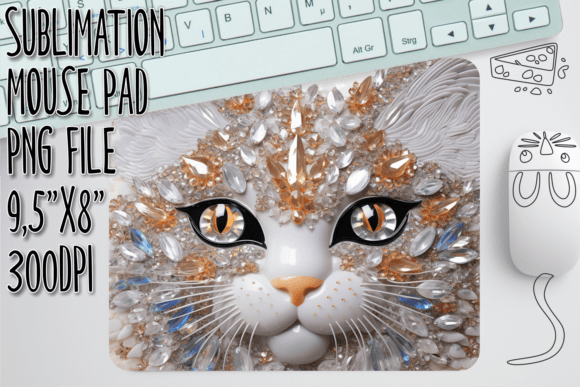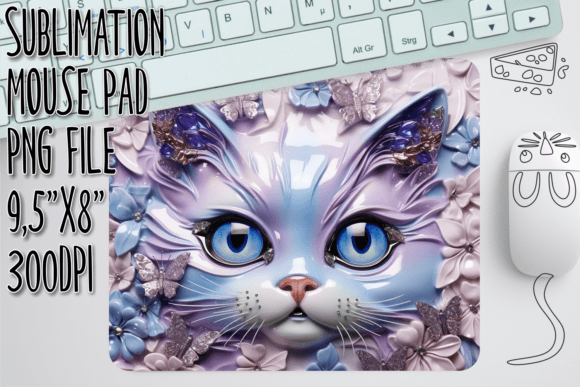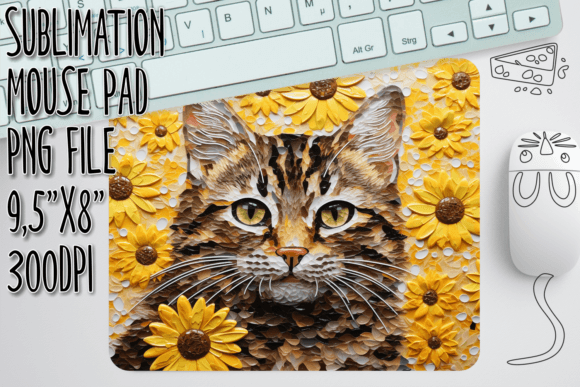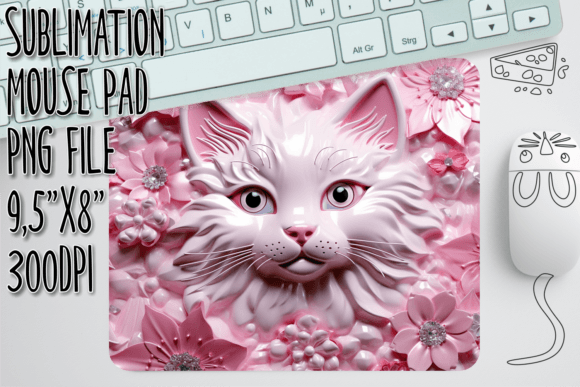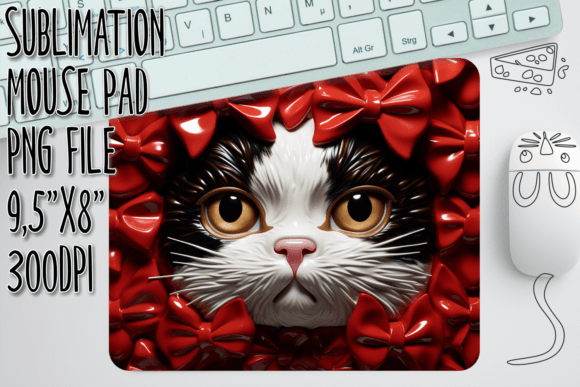
Integrating the 3D Feline Fantasy Mouse Mat Design into Your Sublimation Workflow
In the evolving landscape of digital product creation and physical merchandise production, the bridge between a digital asset and a tangible item is often defined by preparation and precision. For creators, small business owners, and hobbyists looking to expand their catalog with high-quality desk accessories, the 3D Feline Fantasy Mouse Mat represents more than just a whimsical image; it is a specialized digital component designed for a specific manufacturing process. Understanding how to integrate this asset into your broader workflow is essential for maintaining efficiency, ensuring quality control, and delivering a professional final product.
This article explores the practical implementation of this digital design, focusing on its role within the sublimation printing ecosystem. We will examine the technical specifications, compatibility requirements, and strategic placement of this asset within your creative and production pipelines.
Understanding the Asset: Digital Design vs. Physical Product
The first critical step in any successful production workflow is accurately defining the resources at your disposal. The 3D Feline Fantasy Mouse Mat is a digital file intended exclusively for sublimation use. It is crucial to distinguish this from other common digital formats. This is not an SVG file, nor is it a vector graphic suitable for cutting machines like Cricut or Silhouette. It cannot be utilized as a cutting file for vinyl or heat-transfer vinyl (HTV) applications.
Furthermore, the purchase grants you access to a downloadable design only. There is no tangible product shipped to your door. This distinction is vital for inventory planning and customer expectation management. If you are a creator selling finished goods, you are purchasing the right to print this design onto blank substrates. If you are a end-user, you are acquiring the tool to create a custom item for personal use or gifting. Recognizing this boundary early prevents workflow bottlenecks where one might mistakenly attempt to import the file into vector-based software for cutting purposes.
Technical Specifications and Quality Control
Quality consistency in sublimation printing relies heavily on the resolution and format of the source image. The provided asset is a single PNG file, measuring 9.5 x 8 inches. This dimension is specifically calibrated for standard mouse mat substrates, allowing for full-bleed printing with minimal waste. The file boasts a remarkable high-resolution image quality at 300 DPI (dots per inch).
In practical terms, 300 DPI is the industry standard for high-quality photographic printing. Lower resolutions often result in pixelation or blurriness when transferred to fabric or coated surfaces. By providing a file at this density, the design ensures that the intricate details of the "3D Feline Fantasy" aesthetic—such as depth, shading, and color gradients—are preserved during the heat transfer process. When integrating this into your workflow, always verify that your design software maintains this resolution during any resizing operations. While the file can be adjusted in size with ease, scaling up significantly beyond its original dimensions may compromise image integrity.
Workflow Integration: From Download to Production
Integrating the 3D Feline Fantasy Mouse Mat design into your routine requires a structured approach. Whether you are a freelancer managing multiple client orders or a hobbyist creating gifts, the following phases outline a efficient process.
Phase 1: Preparation and Organization
Upon downloading the PNG file, immediate organization is key. Store the file in a dedicated directory for sublimation assets, separate from cut files or web graphics. This prevents accidental usage errors later in the process. Before beginning any print job, ensure your sublimation printer is calibrated. Check ink levels and perform a nozzle check to guarantee that the vibrant colors of the fantasy design are reproduced accurately. Sublimation ink behaves differently than standard dye or pigment ink, and proper printer maintenance is a prerequisite for high-quality outcomes.
Phase 2: Design Adjustment and Layout
Open the PNG file in your preferred raster image editing software, such as Adobe Photoshop, GIMP, or Affinity Photo. Since the file is already sized at 9.5 x 8 inches, it may require minimal adjustment. However, if you are using a mouse mat blank with slightly different dimensions, you can resize the image while maintaining the aspect ratio. Ensure that the "Resample" option is set to preserve quality, preferably using bicubic smoother for enlargements or bicubic sharper for reductions.
At this stage, consider the orientation of the design. The 3D effect relies on specific lighting and perspective cues. Flipping or rotating the image arbitrarily may disrupt the visual illusion. Keep the design intact unless you have a specific creative reason to alter it. Once satisfied with the layout, prepare the file for printing. Ensure that your print settings are configured for "High Quality" or "Photo" mode, and select the correct paper type setting if your driver allows it (often "Matte Photo Paper" works well for sublimation paper).
Phase 3: The Sublimation Process
Print the design onto high-quality sublimation paper. Remember that sublimation prints appear dull on paper; the vibrancy emerges only after heat transfer. Allow the ink to dry completely to prevent smudging. Prepare your mouse mat blank, ensuring it is clean and free of dust or lint. Place the printed design face down on the mouse mat, securing it with heat-resistant tape to prevent shifting during the press cycle.
Use a heat press set to the manufacturer’s recommended temperature and time for your specific mouse mat substrate. Typically, this ranges between 380°F to 400°F for 45–60 seconds, with medium to firm pressure. Consistency here is crucial. Use a timer and ensure even pressure across the platen. After pressing, carefully remove the paper while hot (or cold, depending on the paper type instructions) to reveal the transferred design. The result should be a vivid, durable, and scratch-resistant image embedded into the fabric surface.
Compatibility and Versatility
While optimized for mouse mats, the versatility of this high-resolution PNG allows for broader applications within your creative toolkit. The 9.5 x 8 inch dimension and 300 DPI quality make it suitable for other flat sublimation items of similar size, such as small placemats, coaster sets (if tiled appropriately), or decorative panels. However, always test on a sample piece before committing to a full production run. Different substrates absorb ink differently, affecting color saturation and sharpness.
This digital file interacts seamlessly with standard sublimation workflows. It does not require specialized plugins or proprietary software. Any program that supports PNG imports and basic image manipulation can handle this asset. This compatibility reduces the learning curve and allows for quick integration into existing business models or hobby projects.
Strategic Considerations for Creators and Entrepreneurs
For small business owners and marketers, the 3D Feline Fantasy Mouse Mat design offers a low-risk entry into niche markets. The fantasy and feline themes appeal to specific demographics, including gamers, cat enthusiasts, and fans of digital art. By leveraging this pre-made, high-quality asset, you save significant time on illustration and design, allowing you to focus on marketing, customer service, and production efficiency.
When listing products created with this design, transparency is essential. Clearly communicate that the item is sublimation-printed, which ensures durability and washability. Highlight the high-resolution quality and the unique 3D aesthetic as selling points. Use mockups that accurately represent the final product to manage customer expectations. Since you are not selling the digital file itself but the physical manifestation of it, your value proposition lies in the quality of your printing and finishing.
Long-Term Use and Asset Management
Digital assets are long-term investments. Save a backup of the original PNG file in a cloud storage solution or external drive. This ensures that you can revisit the design for future batches without relying on email downloads or temporary links. Over time, you may build a library of similar sublimation designs. Organize them by theme, size, and resolution to streamline future project selection.
Regularly review your production outcomes. If you notice color shifts or quality degradation, revisit your printer calibration and heat press settings before assuming the fault lies with the digital file. Given the high specification of this asset, most issues will stem from the physical printing process rather than the source image.
In conclusion, the 3D Feline Fantasy Mouse Mat digital design is a robust tool for anyone engaged in sublimation printing. By understanding its technical constraints, respecting its intended use, and integrating it into a disciplined workflow, you can achieve consistent, high-quality results. Whether for personal enjoyment or commercial enterprise, this asset provides a reliable foundation for creating distinctive and appealing desk accessories.