Integrating the 3D Pink Roses and Gold Chains Wrap into Your Sublimation Workflow
In the competitive landscape of custom merchandise, visual appeal is often the primary driver of consumer engagement. For creators and small business owners specializing in personalized drinkware, the difference between a standard product and a bestseller frequently lies in the quality and uniqueness of the design assets used. The 3D Pink Roses and Gold Chains Wrap represents a specific category of digital asset designed to streamline the production process for 20oz skinny tumblers. By understanding how this high-resolution graphic integrates into a broader sublimation workflow, entrepreneurs can reduce preparation time, maintain consistent quality, and enhance the perceived value of their final products.
This article explores the practical implementation of this digital file, focusing on technical specifications, workflow integration, and quality control measures. Whether you are a seasoned sublimation professional or a hobbyist looking to refine your process, understanding the nuances of using pre-designed wraps can significantly impact your operational efficiency.
Understanding the Asset Specifications and Quality Standards
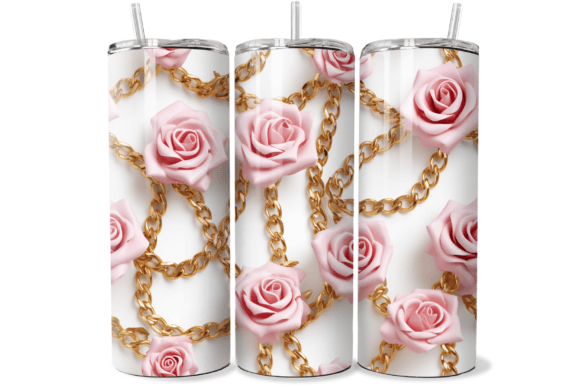
Before integrating any digital asset into a production line, it is crucial to evaluate its technical foundation. The 3D Pink Roses and Gold Chains Wrap is provided as a PNG file with a resolution of 300 DPI (dots per inch). This specification is non-negotiable for high-quality sublimation. Lower resolution images often result in pixelation or blurriness when printed on curved surfaces, particularly on metal substrates like stainless steel tumblers. A 300 DPI ensure that the intricate details of the 3D roses and the metallic sheen of the gold chains remain crisp and defined after the heat transfer process.
The listing includes two distinct variations: one straight PNG and one tapered PNG. This distinction is vital for accurate application. Skinny tumblers are not perfect cylinders; they often have a slight taper from top to bottom. Using a straight design on a tapered tumbler can result in misalignment at the seam or distortion of the pattern. By providing both options, the asset allows creators to match the digital file to the physical geometry of their specific blank product. This attention to detail reduces waste and minimizes the need for trial-and-error adjustments during the printing phase.
Pre-Production Preparation and Software Compatibility
Effective use of the 3D Pink Roses and Gold Chains Wrap begins with proper software setup. While the file is ready to print, it requires resizing to fit the specific dimensions of your target tumbler. The recommended size is 9.3” x 8.2”. However, this is not a one-size-fits-all metric. Different manufacturers produce blanks with slightly varying dimensions. Therefore, the first step in your workflow should be measuring your specific inventory.
You will need image editing software capable of handling high-resolution PNG files without compression artifacts. Programs such as Adobe Photoshop, CorelDRAW, or Silhouette Studio are commonly used in this industry. The process involves importing the PNG, checking the image size settings to ensure the resolution remains at 300 DPI, and adjusting the canvas dimensions to match your tumbler’s wrap area. It is essential to verify that your software supports transparency, as PNG files rely on alpha channels to define the edges of the design. If your software flattens the image incorrectly, you may encounter white borders or background issues during printing.
Furthermore, organization plays a key role in scalability. As your product line grows, maintaining a structured library of digital assets becomes necessary. Store the original, unedited files in a secure backup location. Create separate folders for "Ready to Print" files that have been resized for specific tumbler models. This separation ensures that you never accidentally overwrite the master file and allows for quick retrieval during high-volume order periods.
Integration into the Sublimation Process
Once the digital file is prepared, it moves into the printing and application phase. The 3D Pink Roses and Gold Chains Wrap is designed for sublimation, a process that uses heat and pressure to transfer dye onto materials like coated metals. The quality of the output depends heavily on the interaction between the digital file, the sublimation paper, and the heat press settings.
When printing, ensure your printer is calibrated for sublimation ink. Color accuracy is critical, especially with designs featuring gold elements. Gold tones can shift significantly if the color profile is incorrect, potentially resulting in a muddy or overly yellow appearance rather than a realistic metallic look. Test prints on plain paper can help verify color balance before committing to expensive sublimation paper.
During the wrapping process, precision is key. Align the printed design with the seam of the tumbler carefully. Because the design features continuous elements like chains and roses, any misalignment at the seam will be visually jarring. Use heat-resistant tape to secure the paper tightly against the tumbler surface. Air bubbles or wrinkles between the paper and the metal will cause voids in the transfer, ruining the aesthetic. The tapered version of the file should be used with care, ensuring the wider end of the design aligns with the wider part of the tumbler if applicable, though most skinny tumblers have minimal taper that is accounted for in the design distortion.
Quality Control and Post-Production Considerations
After the heat press cycle is complete, allow the tumbler to cool before removing the paper. This cooling period helps set the ink and prevents smudging. Inspect the final product under good lighting. Look for any signs of ghosting, where the image appears double, or banding, which indicates printer head issues. The 3D Pink Roses and Gold Chains Wrap should appear vibrant, with the pink roses showing depth and the gold chains exhibiting a consistent tone.
Consistency across batches is a hallmark of professional production. If you are fulfilling multiple orders, keep your heat press temperature and time settings consistent. Document these settings alongside the design file name in your workflow logs. This documentation allows you to replicate successful results and troubleshoot issues if a batch does not meet quality standards. Additionally, consider the durability of the final product. Sublimated designs are generally durable and dishwasher safe, but proper curing ensures longevity. Educate your customers on care instructions to maintain the integrity of the design over time.
Expanding Utility Beyond Standard Tumblers
While the primary use case for this asset is the 20oz skinny tumbler, its versatility extends to other projects. The listing notes that the image can be resized for various applications. Creators can adapt the 3D Pink Roses and Gold Chains Wrap for different sized drinkware, such as 15oz mugs or 30oz tall tumblers, by adjusting the aspect ratio and resolution accordingly. However, when resizing, always maintain the 300 DPI standard to avoid quality loss.
Beyond drinkware, this design can be integrated into broader marketing materials. Use the mockup included in the listing to create social media content, website banners, or email newsletters. High-quality mockups allow potential customers to visualize the product before purchase, increasing conversion rates. By incorporating the actual design into your marketing assets, you provide an accurate representation of what the customer will receive, building trust and reducing return rates due to expectation mismatches.
For educators and workshop leaders, this asset serves as an excellent example for teaching sublimation techniques. It demonstrates the importance of matching digital templates to physical object geometry. Students can learn about taper correction, color management, and heat press calibration using this specific design as a case study. Its clear visual elements make it easy to identify errors in alignment or printing, facilitating a more effective learning experience.
Long-Term Workflow Efficiency
Adopting high-quality, pre-made designs like the 3D Pink Roses and Gold Chains Wrap is a strategic decision for long-term business efficiency. Creating complex 3D designs from scratch requires significant time, specialized software skills, and creative energy. By leveraging professionally created assets, you free up resources to focus on other aspects of your business, such as customer service, marketing, and product expansion.
However, reliance on external assets requires diligent management. Keep track of licensing terms and usage rights. Ensure that you have the necessary commercial rights to sell products made with the design. Organize your digital library so that you can quickly locate files when needed. Regularly update your software and hardware to ensure compatibility with high-resolution files. By treating digital assets as integral components of your production infrastructure, you build a scalable and resilient business model.
In conclusion, the successful implementation of the 3D Pink Roses and Gold Chains Wrap involves more than just printing and pressing. It requires a holistic approach that encompasses technical preparation, precise execution, and rigorous quality control. By integrating this asset into a well-structured workflow, creators can produce high-quality, visually appealing products that meet customer expectations and drive business growth. The key lies in understanding the interplay between digital precision and physical application, ensuring that every tumbler produced reflects the highest standards of craftsmanship.